Opus 5.5 writes its Magnum Opus (2500 times)
A four-movement symphony for full orchestra. Claude wrote it, recorded it and made the video, over about 2,500 rounds of review.
"I fear not the man the man who one shots 2500 symphonies with Claude, rather I fear the man who 2500 shots a single symphony with Claude"
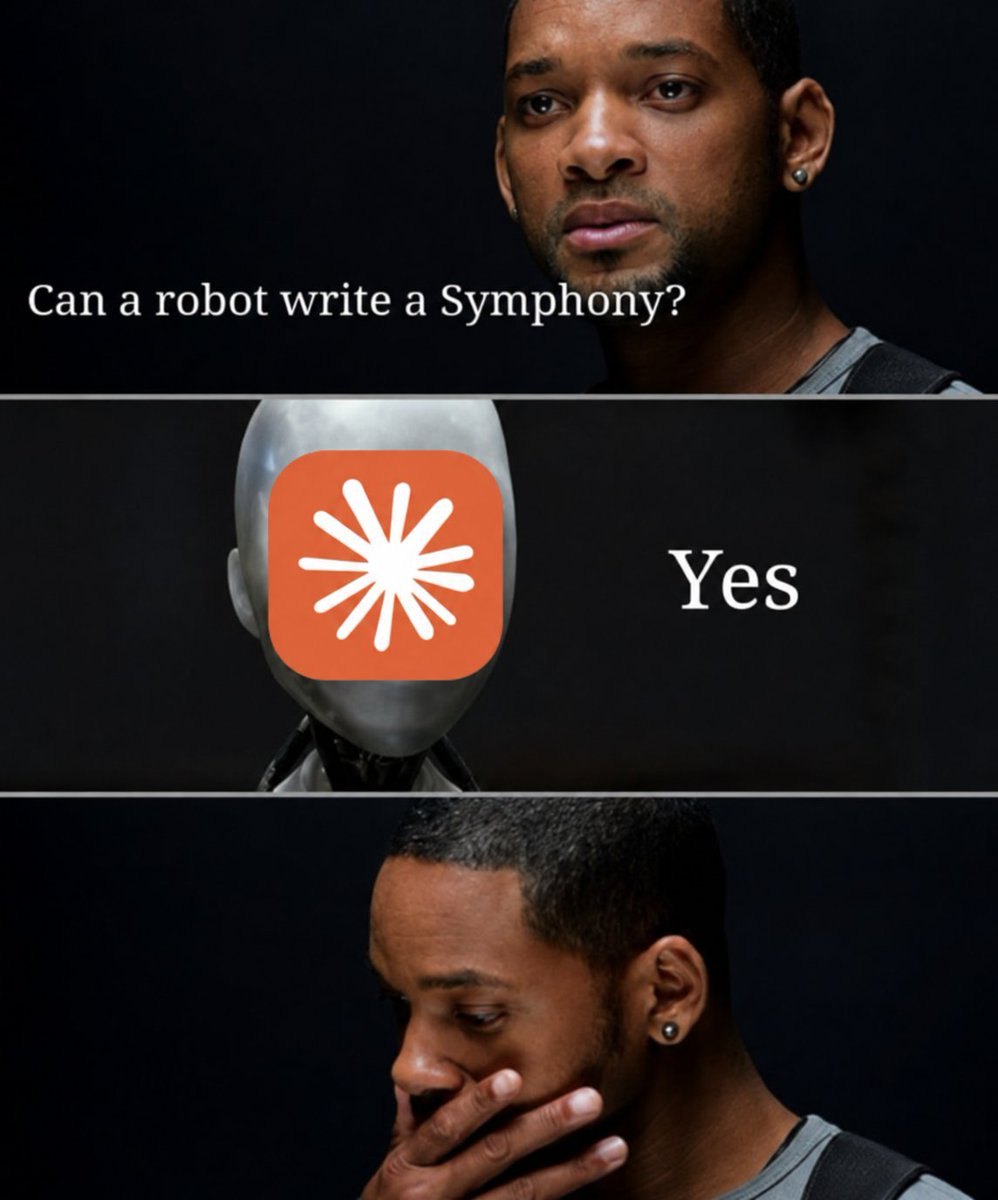
So, I got bored and wanted to push Opus to its limit with respect to music composition. Basically, I did the meme:
You can watch a full virtual instrument rendering of the composition on youtube here, which is likely higher quality than the version you'd get streamed from x.com:
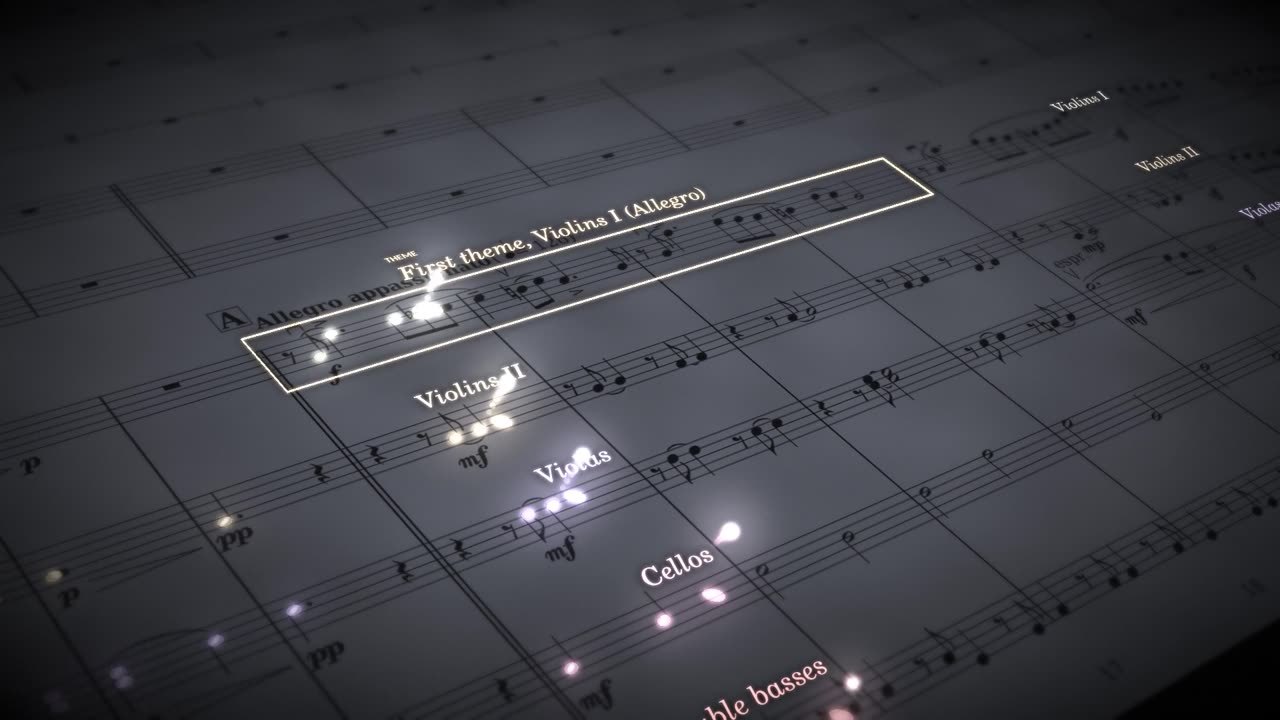
YouTube picks the picture quality from your connection and the size of the player. For a sharper score, choose 1080p or higher under the gear icon, or go full screen.
- 4movements
- 929bars
- 22,979notes
- 25 minof music
- 35BOpus tokens, roughly
The full scores, as PDF:
The source of the scores, the critics' reviews and the scripts are on GitHub: github.com/halfprice06/claude-symphony
These are virtual instruments, so the audio quality is not as good as if an orchestra recorded this live. But its pretty good, and considering Claude did all of the mockup and rendering in a DAW with pro-level VSTs, I'd say the result is still pretty impressive.
The whole thing used around 35 billion Opus tokens.
We used Claude Code Projects (beta) for this, and I find it really useful for project-based coding. The orchestrator / thread model worked really well for us in practice. Generally, each movement was owned by a thread.
I thought the process I used to achieve this was pretty interesting, so I decided to write it up.
tl;dr - For things that can't be 'verified' as good or bad like art/music, just make the agent do more iterations, way more iterations than you think.
There were three jobs: writing the symphony, turning the score into a recording, and making the video. I'll go through them in that order.
Part 1: Writing the symphony
Claude Opus 5.5 composed a four-movement symphony for full orchestra, about 25 minutes of music, in one month. This is how it was done.
The music is written as text
Claude cannot easily click notes onto a staff, but it can write text. So the whole score was written in LilyPond, a free program that turns typed text into printed sheet music. A note is a letter and a number: c4 is a C that lasts a quarter note. From the same text, LilyPond also produces a basic computer playback.
Because the score is text, Claude could edit it, compare two versions, and check it with small programs, the way programmers work on code.
The first theme of Movement I, as Claude typed it
These eight bars for the first violins are copied from the score's source text. Point at a note in the text or on the staff to find it in the other. Click a note to hear it.
Swipe the staff sideways to see all of it.
"Only these notes" is a simple synthesizer in your browser playing the violin line alone. The recording is the same eight bars from the final mockup, with the whole orchestra.
One Claude writes, another reviews
The method is called an actor-critic loop. One Claude, the composer, writes the music. Another Claude, the critic, reviews it.
- The composer writes a version of a movement.
- A new critic, which has never seen the piece before, studies it and suggests specific fixes.
- The composer decides which fixes to accept.
- The result becomes the next version, and a new critic starts again.
Each critic looked at one subject only, such as melody, harmony, the use of the instruments, or whether the parts are playable. A written log recorded every decision, so that a later critic would not undo an earlier one.
Each movement went through this loop about 600 times. With four movements, that's about 2,400 rounds.
Originally I only planned to do this looping process around 50 times. But once I hit 50, it seemed like the agent was still improving. So, I just kept going. This entire process was mostly autonomous. I just prompted Claude to keep going.
Every round, from the written log
Each square is one round. Time runs from left to right, ten rounds per column, and each of the ten rows is one critic's subject. Pick a square to read that round's line in the log.
Swipe the grid sideways to see later rounds.
Loading the log…
the log records a change
the log says nothing was changed
These are the real lines from the log, cut to about 200 characters. They are written in the working shorthand of the loop, with bar numbers and instrument names.
Critics had to read the textbooks
A critic's opinion was not enough. I supplied standard textbooks on orchestration, harmony and music notation. From then on, each critic was assigned a chapter and had to show where the score followed it and where it did not.
One example: an orchestration textbook says that in loud passages two horns are needed to balance one trumpet. A critic checked every loud brass chord against that rule, found three chords where an important note was too weak, and proposed fixes. The composer accepted all three.
Great symphonies as models
Claude also collected scores by composers such as Beethoven, Dvořák and Tchaikovsky. Every tenth critic compared a whole movement with one movement by a master and answered one question: would a conductor believe a master wrote this?
What I did
I set the goal: a symphony that could pass for the work of a master, with melodies people remember. I chose the method, supplied the books and decided how long the loops ran. I left the musical choices to Claude.
I was also the only one who could listen. Claude cannot hear audio, so it judged the music from the written score. I listened to computer playbacks and asked for a small number of changes.
Version 1 next to the final version
I thought it would be neat to compare version 1 of each movement against the final version. There are no high quality recordings of version 1, so both are played here with the same basic MIDI sounds, which is the closest thing to compare.
Version 1 against the final version
The strip is the final version of the movement, one segment per bar. The brighter a bar, the more of its notes are new or changed since version 1. Click anywhere on the strip to play from that bar, and switch between the two versions while it plays.
A note counts as kept when version 1 has the same pitch at the same place in the matching bar. A pitch played by several instruments at once counts once. A program matched the bars of the two versions, so the shading is approximate. Both versions are set to the same volume.
Version 1 of Movement I was a sketch for strings only, and its first theme was different. In Movements II, III and IV the main themes begin with the same notes in version 1 and in the final version, and the bright bars on the strips show where the changes are. By the count described above, about 14% of the notes in the final Movement I were already in version 1, 35% in Movement II, 61% in Movement III and 55% in Movement IV.
What to keep in mind
Claude wrote 99.9% of every single element of the composition. I maybe influenced a measure or two of note selection over the whole process.
Part 2: Turning the score into a recording
A written score doesn't make any sound, so the next job was a recording.
The recordings of the symphony are not a live orchestra. They are mockups: every note was recorded in advance by real players, and software plays those recordings back in the order the score asks for. This is how the four mockups, about 25 minutes of music, were made.
The tools
Two programs did the work, both on my Mac. REAPER is a music production program. It holds one track per instrument, mixes them together and saves the result as an audio file. EastWest Hollywood Orchestra is the library of recorded notes. (These are the DAW and the pro-level VSTs I mentioned at the top.)
Claude did not click around in either program. It wrote scripts that read the score and built each REAPER project from it. The score is a text file, written in LilyPond, so a script can read every note and every marking directly.
Claude cannot hear
A person making a mockup listens, adjusts, and listens again. Claude cannot listen. It can only measure the audio file. So after every recording it checked things that can be measured:
- Is the melody louder than the accompaniment?
- Does each note start on the beat?
- When a loud chord stops, does the sound die away as fast as it does on a real orchestra recording?
The loop
Each movement was improved in rounds. Every round had the same four steps:
- Record the movement.
- Three critics measure the recording. Each critic is a separate Claude with one job. One checks how the notes are played. One checks the balance between instruments. One checks something different each round, such as the timing or the sound of the room.
- Each critic writes a short list of the worst problems, with evidence and a suggested fix.
- Another Claude decides which fixes to make, changes the scripts and records again.
The four movements took 184 rounds in total.
The opening of the finale at six stages
The same 18 bars, from the basic computer playback to the final recording. Pick a stage to hear it. You can switch while it plays.
All six clips are set to the same volume here, so the differences you hear are in the playing and the mix. As first made, rounds 0 to 11 were 5 to 6 dB quieter than rounds 20 and 30.
My listening
The measurements missed things, and I caught them by listening. I said the long timpani rolls were drowning out other instruments. I said the accents were too harsh, the sound was "too wet" and "a bit mushy", repeated notes were hard to tell apart, and the recordings were too quiet on AirPods.
Each of my notes became a rule, and a new thing for the critics to measure. Two examples:
- Too wet. The reverb was cut in half and shortened.
- A volume change on almost every note. I opened a project and saw that the loop had been fixing problems by moving the volume fader note by note. No person works that way. All of those moves were removed, and the problems were fixed the way a person would fix them: by changing how the instrument plays the note.
Learning from people who do this by hand
About a month in, we studied how professionals make mockups. The sources were YouTube tutorials by film-score mixers, the sample library maker's own template project, and project files that composers have shared for others to study. Three lessons changed the recordings most: use less reverb, shape each phrase so it rises and falls, and leave a small gap between repeated notes.
Part 3: Making the video
The last job was the video at the YouTube link above.
Each video shows the orchestra's sheet music as a dark page. Every note lights up at the moment it sounds, in a color for its instrument, and a small light hops from note to note along each instrument's line. A program worked all of this out from the written score and the recording.
Finding the notes
Like I said above, the score is written as text in LilyPond. For the videos, LilyPond printed each movement as one long line and also wrote down where on the page it put every note. That gave the video program the exact place of all 22,979 notes.
Staying in time
The recording speeds up and slows down, as any performance does. REAPER, the software that made the recording, keeps a list of every change of speed. The video program uses that list to work out the second at which each note sounds. The lights land within two hundredths of a second of the sound.
Pointing the camera
An orchestra's score is too tall to fit on the screen, so the camera shows only part of the page. It goes to the instruments that are loudest in the recording at that moment. The program plans the camera's whole route before it draws anything, so the camera moves seldom and arrives before the passage it is moving to begins. When two instruments far apart on the page matter at the same time, the screen splits in two.
Words on the page
Each instrument's name is printed on the page where it starts to play. Short labels, 124 in all, point out what a music theory class would: a theme coming back, an unusual chord, a quotation from an earlier movement. One Claude wrote the labels from the score, and a second Claude checked every one against the notes.
Watching and fixing
I watched each version and said what looked wrong. The camera jerked around. The instrument names shifted about. The opening took 19 seconds to reach the first sound. Each comment led to a fix, and the videos were made five times in two days. The four movements were then joined into one 25-minute video for YouTube, and its music now starts in the first second.
Adding it up
So that's the whole process. Add it up and it's about 2,400 rounds on the score, 184 on the recordings and 5 on the video. That's roughly the 2500 in the title.
None of those rounds had a pass/fail test, because there isn't one for whether music is good. What I could do was give each critic one narrow thing to check, make it back up its opinion with a textbook or a measurement, and run the loop way more times than seemed necessary. Then I listened to the result myself, because Claude can't.
Credits
- Composer: Opus 5.5
- Assistant for the final mockup recordings and the video: Fable
- Human overseer: Dan Price (me)
GitHub repo
The scores, the reviews and the scripts from this project are on GitHub: github.com/halfprice06/claude-symphony
For orchestras
If you are with a professional symphony orchestra and might be interested in performing this live, please reach out to me. I'm on X at x.com/gooby_esq, or you can email me at [email protected].